
- posted: Feb. 11, 2025
- News & Updates
Cervical Traction with the Y-Strap
By: Dr. Ayhem Sabry B.S., D.C.
Introduction
Spinal traction has been a well-established therapy in the health and wellness profession for centuries, demonstrating positive physiological, anatomical, and neurological benefits. The primary purpose of spinal stretching and traction is to relax the muscles, align the spine anatomically, and open the intervertebral foramina (IVF). Among the various techniques used to achieve these outcomes, Y-axis spinal adjustments have gained popularity among chiropractors, osteopaths, and physiotherapists worldwide. The widespread presence of Y-strap spinal adjustments on social media platforms like YouTube and Facebook has fueled interest in this method. However, an essential question remains: Is the Y-Strap safe?
Twist Manipulation Techniques
One of the primary distinctions of Y-axis spinal manipulation is that it does not involve torque, unlike many traditional spinal manipulations performed by chiropractors and physiotherapists. Torque-based manipulations apply a twisting motion combined with specific force to mobilize the vertebrae, often requiring rotation of certain parts of the spine, including the neck, in a flexed or lateralized position. While these techniques can provide pressure relief on one side of the spine, they also pose potential risks, particularly to the vertebral artery.
The Vertebral Artery and Potential Risks
To evaluate the safety of Y-axis manipulations, it is crucial to understand the role of the vertebral artery. This artery supplies blood and nutrients to the brain, brainstem, cerebellum, and spinal cord. Originating from the subclavian artery, it travels along the vertebrae, passes through the skull, and ultimately reaches the basilar artery to nourish the brain.
A significant feature of the vertebral artery is its curve near the atlas (C1), which allows for flexibility and absorption of neck rotation. Traditional neck manipulation techniques involving rotational movements may pose a risk of compromising the vertebral artery, particularly in individuals with pre-existing calcifications or hardened arterial walls. Studies have suggested that vertebral artery dissection (VAD), though rare at less than 0.01%, can be associated with cervical spinal manipulation, making it a potentially serious condition.
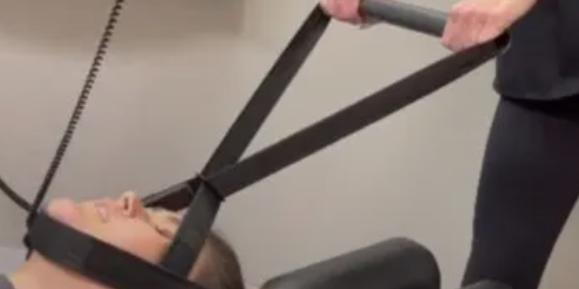
However, the Y-axis adjustment performed with a Y-Strap does not introduce rotational movement, as it applies force strictly along the spine’s vertical axis. This absence of torsion is a key factor in making Y-axis adjustments potentially safer compared to traditional rotational manipulations.
Why Y-Axis Manipulations Are Safer
From a vascular standpoint, Y-axis manipulations reduce the risk of arterial flexion or rotation, making them a safer alternative to traditional torsion-based techniques. Additionally, the spine's ligaments provide natural protection against over-elongation, minimizing the risks of damage to bones, muscles, and ligaments.
However, the safety of the Y-axis adjustment depends on proper execution. If performed incorrectly—such as by pulling at an incorrect angle or applying excessive force—there is a potential for unintended torque, which could introduce risks. Thus, ensuring correct alignment and technique is critical.
Appropriate Force in Y-Axis Adjustments
The amount of force used in Y-axis adjustments varies significantly, as seen in various images and videos online. Some adjustments produce barely noticeable movements or sounds, while others appear more forceful. The necessary pulling force depends on individual patient factors, including weight, physical condition, and spinal health. Consequently, only trained and certified professionals should perform Y-axis adjustments, as they can assess and tailor the procedure to each patient’s unique needs.
Conclusion
The Y-Strap is primarily used to stretch the spine and facilitate Y-axis adjustments, with some chiropractors and physiotherapists incorporating it into their practice. Other manual techniques, such as towel-assisted traction, can achieve similar results. Compared to torsion-based manipulations, Y-axis decompression carries fewer vascular risks, making it a potentially safer alternative for spinal adjustment. However, as with any chiropractic or physical therapy technique, proper execution by a trained professional is essential to ensure patient safety and efficacy.

Reference:
Y-Strap. (n.d.). Is the Y-Strap safe? Retrieved February 11, 2025, from https://y-strap.com/is-the-y-strap-safe/
- posted: Feb. 11, 2025
- News & Updates
Cervical Traction with the Y-Strap
By: Dr. Ayhem Sabry B.S., D.C.
Introduction
Spinal traction has been a well-established therapy in the health and wellness profession for centuries, demonstrating positive physiological, anatomical, and neurological benefits. The primary purpose of spinal stretching and traction is to relax the muscles, align the spine anatomically, and open the intervertebral foramina (IVF). Among the various techniques used to achieve these outcomes, Y-axis spinal adjustments have gained popularity among chiropractors, osteopaths, and physiotherapists worldwide. The widespread presence of Y-strap spinal adjustments on social media platforms like YouTube and Facebook has fueled interest in this method. However, an essential question remains: Is the Y-Strap safe?
Twist Manipulation Techniques
One of the primary distinctions of Y-axis spinal manipulation is that it does not involve torque, unlike many traditional spinal manipulations performed by chiropractors and physiotherapists. Torque-based manipulations apply a twisting motion combined with specific force to mobilize the vertebrae, often requiring rotation of certain parts of the spine, including the neck, in a flexed or lateralized position. While these techniques can provide pressure relief on one side of the spine, they also pose potential risks, particularly to the vertebral artery.
The Vertebral Artery and Potential Risks
To evaluate the safety of Y-axis manipulations, it is crucial to understand the role of the vertebral artery. This artery supplies blood and nutrients to the brain, brainstem, cerebellum, and spinal cord. Originating from the subclavian artery, it travels along the vertebrae, passes through the skull, and ultimately reaches the basilar artery to nourish the brain.
A significant feature of the vertebral artery is its curve near the atlas (C1), which allows for flexibility and absorption of neck rotation. Traditional neck manipulation techniques involving rotational movements may pose a risk of compromising the vertebral artery, particularly in individuals with pre-existing calcifications or hardened arterial walls. Studies have suggested that vertebral artery dissection (VAD), though rare at less than 0.01%, can be associated with cervical spinal manipulation, making it a potentially serious condition.
However, the Y-axis adjustment performed with a Y-Strap does not introduce rotational movement, as it applies force strictly along the spine’s vertical axis. This absence of torsion is a key factor in making Y-axis adjustments potentially safer compared to traditional rotational manipulations.
Why Y-Axis Manipulations Are Safer
From a vascular standpoint, Y-axis manipulations reduce the risk of arterial flexion or rotation, making them a safer alternative to traditional torsion-based techniques. Additionally, the spine's ligaments provide natural protection against over-elongation, minimizing the risks of damage to bones, muscles, and ligaments.
However, the safety of the Y-axis adjustment depends on proper execution. If performed incorrectly—such as by pulling at an incorrect angle or applying excessive force—there is a potential for unintended torque, which could introduce risks. Thus, ensuring correct alignment and technique is critical.
Appropriate Force in Y-Axis Adjustments
The amount of force used in Y-axis adjustments varies significantly, as seen in various images and videos online. Some adjustments produce barely noticeable movements or sounds, while others appear more forceful. The necessary pulling force depends on individual patient factors, including weight, physical condition, and spinal health. Consequently, only trained and certified professionals should perform Y-axis adjustments, as they can assess and tailor the procedure to each patient’s unique needs.
Conclusion
The Y-Strap is primarily used to stretch the spine and facilitate Y-axis adjustments, with some chiropractors and physiotherapists incorporating it into their practice. Other manual techniques, such as towel-assisted traction, can achieve similar results. Compared to torsion-based manipulations, Y-axis decompression carries fewer vascular risks, making it a potentially safer alternative for spinal adjustment. However, as with any chiropractic or physical therapy technique, proper execution by a trained professional is essential to ensure patient safety and efficacy.
Reference:
Y-Strap. (n.d.). Is the Y-Strap safe? Retrieved February 11, 2025, from https://y-strap.com/is-the-y-strap-safe/